
Utah Booking Reports Lookup
Utah booking reports are records created each time a person is booked into a county jail or state facility. These records list the charges, arrest date, bond amount, and personal details of the person held. County sheriff offices across Utah maintain jail booking logs, and the Bureau of Criminal Identification stores criminal history data at the state level. You can search booking reports online through county inmate rosters, the DOC offender search tool, and the BCI criminal records system. This guide covers how to find and request booking reports in Utah.
Utah Booking Reports Quick Facts
Where to Find Utah Booking Reports
Utah has three main sources for booking reports. County jails hold the most detailed records because that is where bookings take place. Each of the 29 county sheriff offices in Utah runs a jail and keeps a log of every person booked in. These logs show the arrest date, charges filed, bond set by the court, and release status. Many Utah counties post their jail rosters online so the public can view current inmates and recent bookings without a formal request.
The Bureau of Criminal Identification is the state-level repository for criminal records in Utah. BCI is part of the Utah Department of Public Safety and operates from 4315 S 2700 W, Suite 1300, Taylorsville, UT 84129. The office is open Monday through Friday from 8 AM to 5 PM. BCI collects arrest data from law enforcement across Utah and builds a criminal history file for each person. You can visit BCI to get a copy of your own Utah criminal record for $20. Call (801) 965-4445 for questions about criminal history requests.
The BCI website provides details about how to obtain criminal records in Utah.
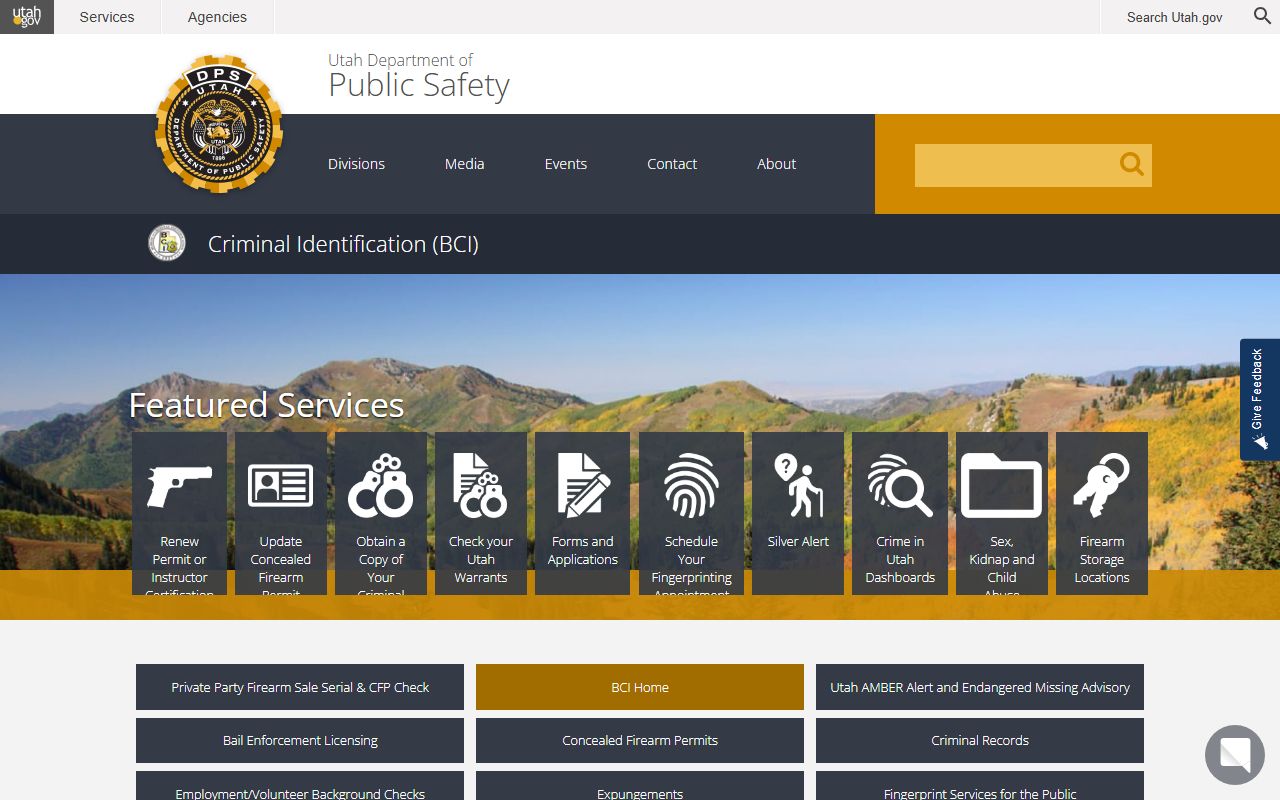
BCI processes roughly 200,000 criminal history requests each year, making it one of the busiest records offices in Utah state government.
The Utah Department of Corrections runs a third resource. When someone is sentenced to state prison, they leave the county jail and enter DOC custody. The DOC offender search lets you look up inmates by name or offender number. This tool covers people in state prison, on parole, or on probation. The DOC Records Bureau is at 14717 S Minuteman Dr, Draper, UT 84020. Reach them at (801) 545-5525.
Note: County jail booking reports and state criminal records are kept by different agencies in Utah, so you may need to check more than one source.
How to Search Booking Reports in Utah
Online tools are the fastest way to search for booking reports in Utah. Most large counties publish inmate rosters on the sheriff office website. Salt Lake County, Utah County, Weber County, and Davis County all offer web-based inmate search tools. You type a name and get results that show booking date, charges, and jail status. These searches are free and open to the public at any hour.
The DOC offender search at corrections.utah.gov covers state-level records. You can search by first and last name or by offender number. Results show the facility where a person is held, their custody status, and their offender ID. This is the best tool for finding people who have moved from county jail to state prison in Utah.
You can view the DOC offender search tool below.
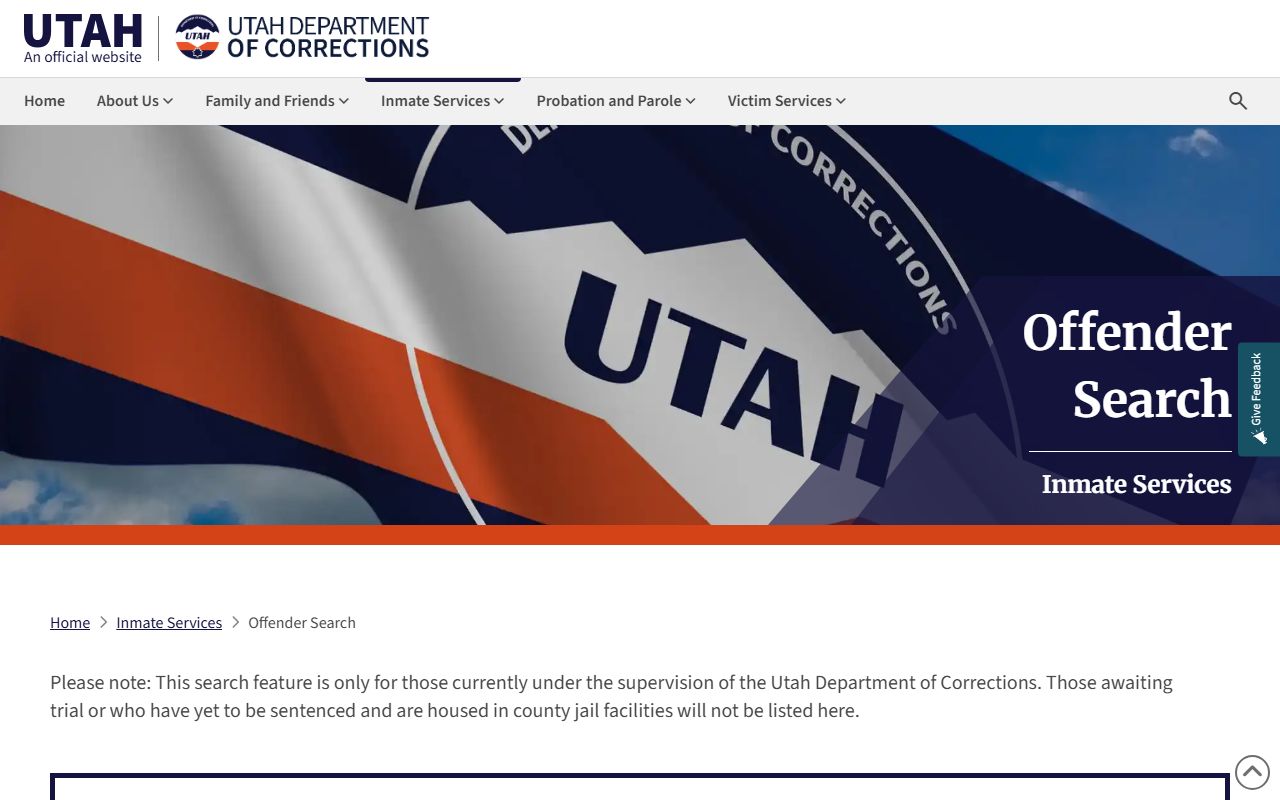
The search requires a first and last name at minimum. Adding a middle name helps narrow results when the name is common in Utah.
For court records tied to arrests in Utah, the XChange system at utcourts.gov gives access to case filings, charges, hearings, and outcomes. XChange uses a subscription or pay-per-search model. Free public access terminals sit in courthouses across all 29 Utah counties. Court staff can help you use the search tools during business hours.
The statewide warrant search is another useful tool. It lets you check for active arrest warrants and bench warrants issued by Utah courts. The system shows the warrant type, issuing court, and charge details.
Utah Booking Reports and Public Records Law
The Government Records Access and Management Act governs public access to booking reports in Utah. GRAMA is found in Utah Code Title 63G, Chapter 2. It works like a state version of the federal Freedom of Information Act. GRAMA applies to all government bodies in Utah, from state agencies down to city offices and school districts. Under this law, records fall into four classes: public, private, controlled, or protected. Booking information sits in the public class.
The GRAMA statute defines what counts as a public record in Utah.
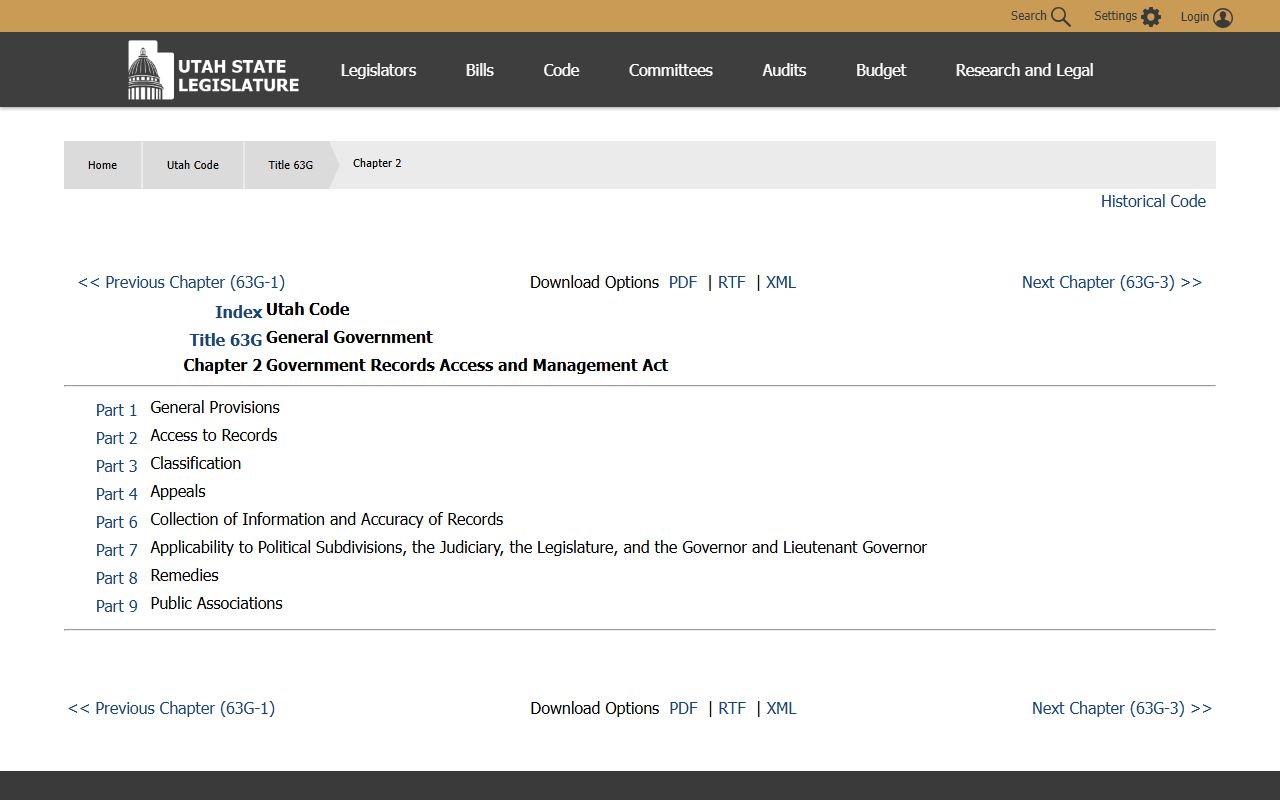
Under Utah Code 63G-2-301, current inmate rosters, basic booking information, charges, and bond amounts are classified as public records. This means any person can request them. You do not need to give a reason for your request. The law does protect some data. Medical records, mental health information, and details that could risk facility security stay restricted. Social Security numbers and financial account numbers are also kept from public view in Utah.
Note: While booking reports are public under GRAMA, certain details within those records may be redacted to protect private information in Utah.
County Jail Booking Records in Utah
Each of the 29 counties in Utah operates a jail through the county sheriff office. The jail staff creates a booking report every time someone is brought in. A typical Utah booking report includes the full name of the person, date of birth, physical description, arrest date and time, arresting agency, charges, bail or bond amount, and court date. These records form the backbone of the criminal justice paper trail at the county level in Utah.
Large Utah counties tend to have the most robust online systems. Salt Lake County runs the Metro Jail and offers a "Find a Prisoner" tool on its website. Utah County has an inmate search through the sheriff office. Weber County publishes a full inmate roster that updates regularly. Sanpete County also posts its roster online. Smaller counties like Daggett, Piute, and Wayne may not have online search tools. For those areas, you can call the sheriff office or submit a records request in writing.
Booking reports in Utah contain specific data points:
- Full legal name and any known aliases
- Date of birth and physical description
- Arresting agency and officer
- Charges at the time of booking
- Bond or bail amount set by the court
- Booking date, time, and jail location
County jails in Utah also track release dates, court appearances, and transfers to other facilities. When a person is sentenced to state prison, the county jail transfers them to the Department of Corrections, and a new intake record is created at the state level. The original booking report stays with the county in Utah.
Utah Arrest Statistics and Data
Utah law enforcement reported 87,015 arrests in 2024 according to data from the BCI crime statistics dashboard. That figure marks a 1.24% drop from 2023. Of those arrests, 61,717 involved men and 25,298 involved women. That breaks down to about 71% male and 29% female, a split that has stayed consistent over recent years in Utah.
Drug and narcotics violations led all categories with 21,033 arrests in Utah during 2024. This was the single largest arrest type in the state. Other notable categories included vandalism at 5,800 arrests, larceny at 3,967, and aggravated assault at 2,784. Burglary accounted for 965 arrests. Kidnapping charges totaled 941. Motor vehicle theft led to 618 arrests. Fraud resulted in 626. Robbery came in at 422. Arson had 104. Murder and negligent homicide totaled 64 arrests across Utah in 2024.
BCI compiles these numbers through the Uniform Crime Reporting program and the National Incident-Based Reporting System. Law enforcement agencies across Utah submit their data, and BCI publishes it for public use. These statistics help show the volume of booking reports generated each year in Utah.
Note: Arrest figures reflect bookings statewide and may include the same person booked more than once in a given year in Utah.
How to Request Booking Reports in Utah
You can request booking reports in Utah through a GRAMA request. Start by identifying the agency that holds the record. For jail booking reports, that is usually the county sheriff office. For state-level criminal records, contact BCI. For DOC records, reach the Records Bureau in Draper.
To submit a GRAMA request, write a letter or fill out the agency's request form. Include your name, address, phone number, and a clear description of the records you want. Be as specific as you can. List the person's name, approximate booking date, and the county if you know it. Send your request to the records officer at the agency. Utah law requires a response within 10 business days. If you show an urgent need, the deadline drops to 5 business days.
The BCI criminal records page explains how to request your own criminal history in Utah.
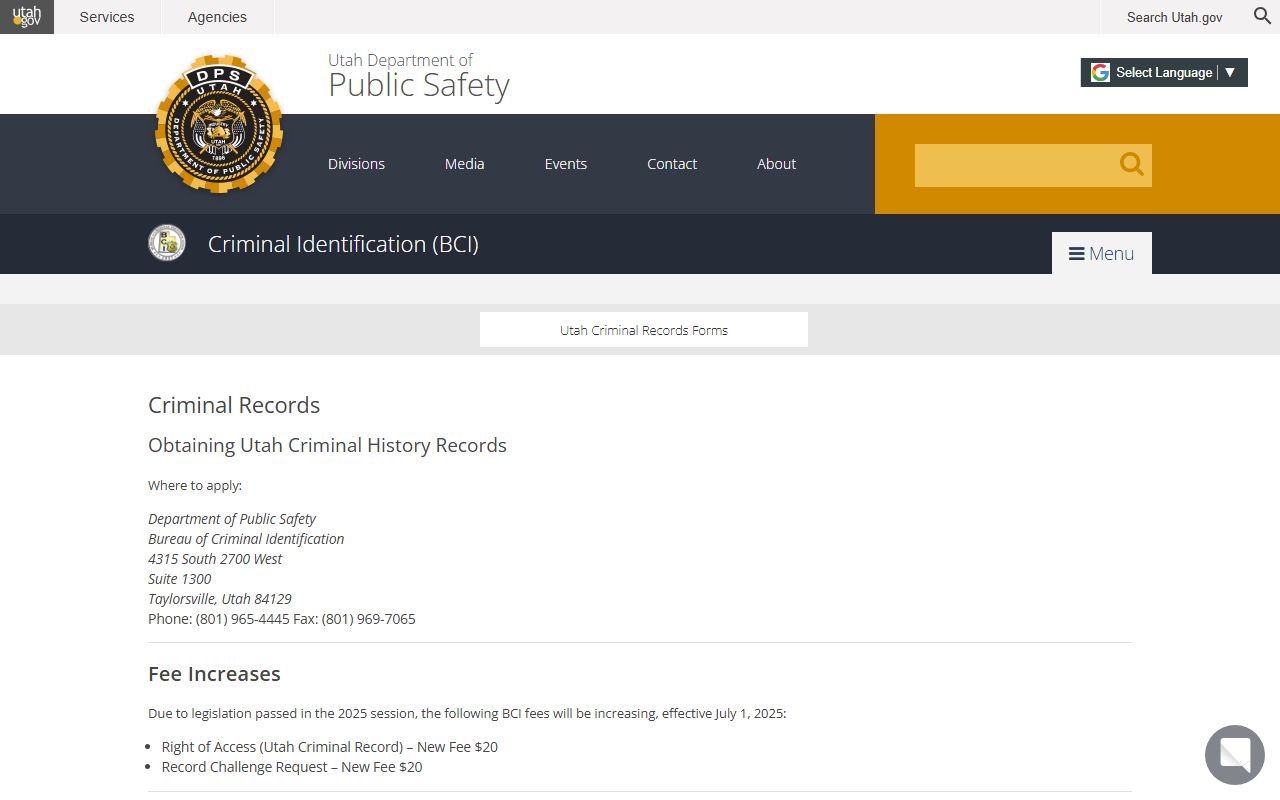
BCI charges $20 for a Right of Access request. You must appear in person with a valid photo ID. Acceptable forms include a driver license, state ID card, passport, or military ID. Utah Driving Privilege Cards are not accepted for this purpose. Payment can be made by cash, check, money order, or MasterCard.
Agencies in Utah can charge reasonable fees to cover the cost of finding and copying records. Staff time, copying costs, and postage may all be billed. The first 15 minutes of research time at court offices is free. Fee waivers exist for people who cannot afford the charges. If your request is denied, you can appeal to the chief administrative officer of the agency. After that, you can go to the State Records Committee or file in district court.
The Utah State Archives holds historical criminal records dating back to territorial times. This is a good resource for older booking records and court files.
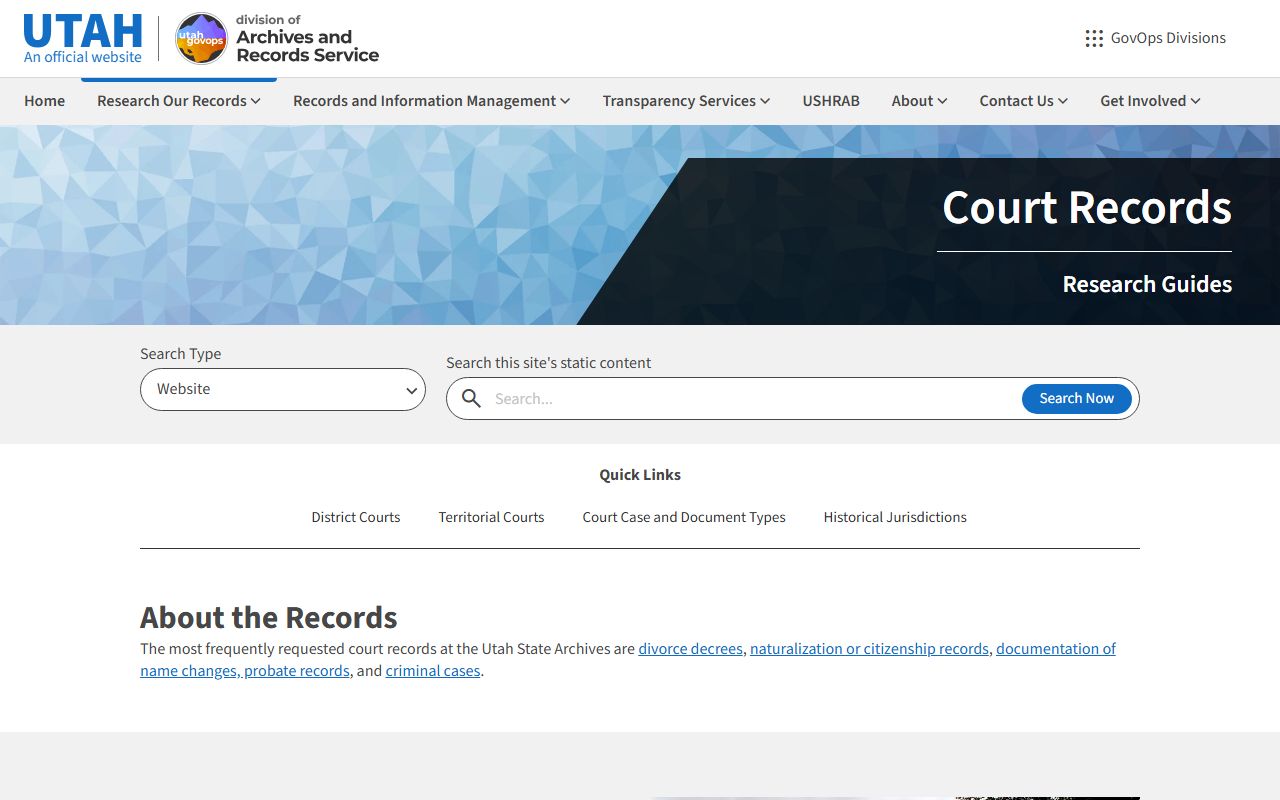
The State Archives collection includes records from the Utah Supreme Court, district courts, and justice courts across the state. Many of these records have been digitized and are available online through partnerships with FamilySearch.
Utah Criminal Record Expungement
Utah allows people to have certain criminal records sealed through expungement. Once a record is expunged, it no longer shows up in public booking reports or criminal history searches. The BCI expungement page outlines the full process.
You can learn more about expungement eligibility on the BCI website.
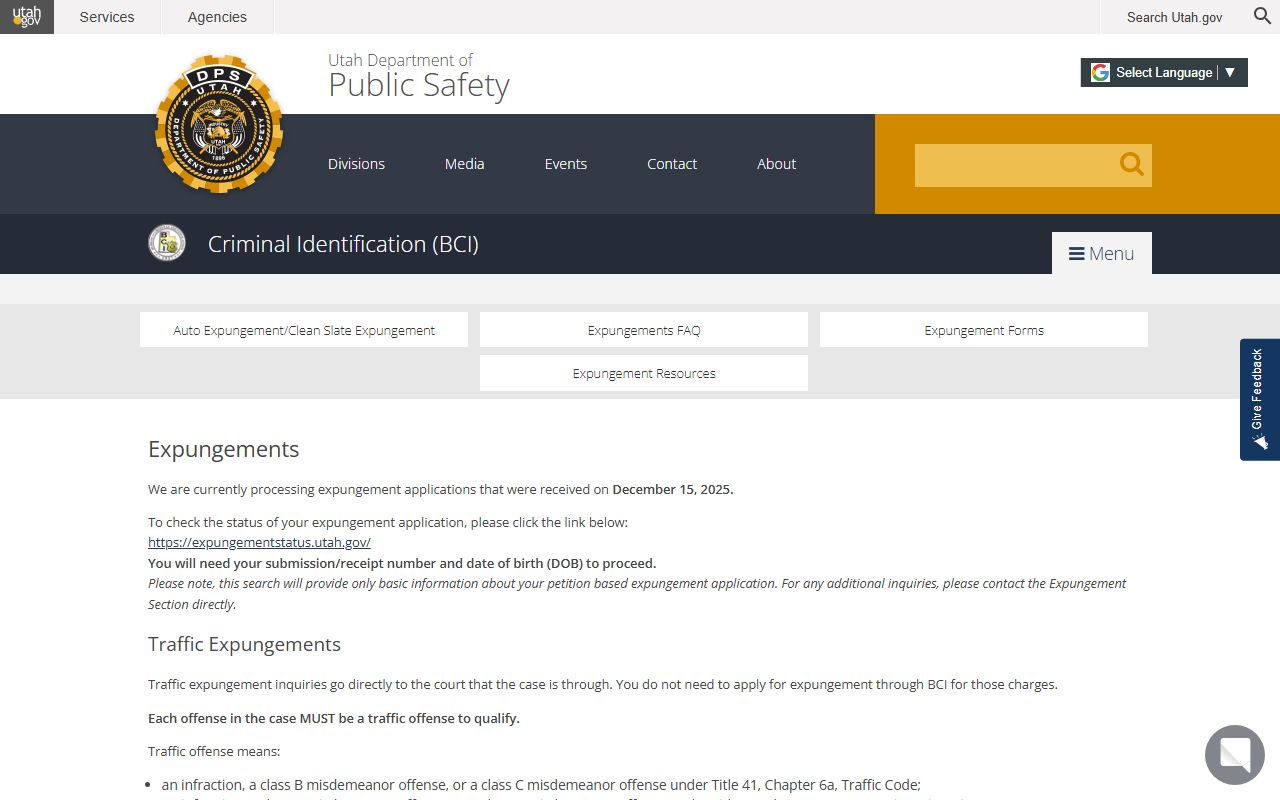
Utah passed a Clean Slate law that created automatic expungement for certain qualifying misdemeanor records. Under this law, eligible offenses are automatically sealed after a waiting period of 5 to 7 years from the date the sentence was completed. The automatic process covers some misdemeanor convictions, dismissed cases, and arrests that never led to charges. This removes the need for those individuals to file a court petition in Utah.
For records that do not qualify for automatic expungement in Utah, you must follow the petition process. The first step is to get a Certificate of Eligibility from BCI. This costs $20 as of July 1, 2025. BCI reviews your full criminal history to check if you meet the requirements. Eligibility rules include limits on the number and type of prior convictions. Violent felonies and sex offenses are excluded from expungement in Utah.
After BCI issues the certificate, you file a petition with the district court in the county where the case took place. The prosecutor gets a copy and can object. The court holds a hearing and weighs factors like the nature of the offense and your conduct since then. If the court grants the petition, it orders all agencies to seal the records. After expungement in Utah, those booking reports and arrest records are no longer visible to the general public.
Note: Expunged records in Utah may still be accessible to certain government agencies for law enforcement or licensing purposes.
Browse Utah Booking Reports by County
Each county in Utah has a sheriff office that maintains jail booking records. Pick a county below to find local booking report resources and contact information.
Booking Reports in Major Utah Cities
City police departments in Utah handle arrests, but booking reports are kept at the county jail. Pick a city below to find arrest record resources for that area.